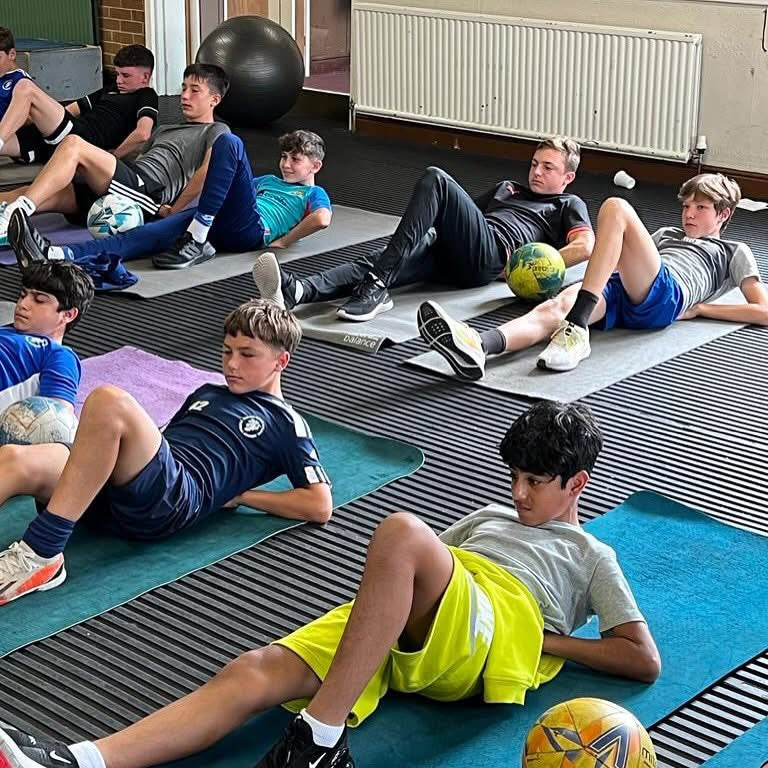

You’re in the 75th minute. Your legs feel heavy. The opposition’s pressed hard all game, and you’re starting to drift out of things. Your first touch isn’t quite sharp. Your positioning’s a step slower. Sound familiar?
This is where real football is won or lost. Not in the first 20 minutes when everyone’s fresh and full of energy. But in those final 15 minutes when bodies are tired and only the properly conditioned players can still execute.
I’ve watched thousands of academy matches, and the pattern’s always the same. The teams that control the final third of the game almost always come out on top. That’s not luck. That’s conditioning.
The Reality of 90 Minutes
Let’s be straight about what you’re actually doing out there. A Premier League midfielder covers between 10 and 13 kilometres per match. That’s a lot of running. But it’s not constant sprinting—far from it. You’re walking, jogging, running hard, and occasionally sprinting, all mixed together depending on what’s happening.
The problem I see with young players is they think endurance means being able to run for 90 minutes without stopping. But that’s not what football demands. You need to maintain your intensity, your decision-making, and your technical ability when you’re tired. That’s the real test.
Most academy players hit a wall around the 60-minute mark. Not because they’ve run out of energy completely, but because they haven’t trained their aerobic system properly. They’ve done fitness work, sure. But not the right kind of fitness work for football.
Building Your Aerobic Base
This is where everything starts. You can’t build a house without foundations, and you can’t build football endurance without a proper aerobic base.
Your aerobic system is what keeps you going. It’s your ability to use oxygen efficiently, to recover between efforts, and to keep performing when things get tough.
Here’s what works:
- Long slow running: One session per week, 30-40 minutes at a pace where you could hold a conversation. Not racing. Not easy either. Steady. This teaches your body to burn fat efficiently and builds capillary density in your muscles.
- Fartlek training: Swedish for “speed play,” and it’s exactly what it sounds like. A 30-minute session where you mix effort levels. Jog for 2 minutes, run hard for 3 minutes, jog for 2 minutes, sprint for 30 seconds. No stopwatch needed. You just vary the intensity based on how you feel. This is closer to football because football doesn’t have set intervals—it’s constant variation.
- Tempo runs: 20-25 minutes at a pace that feels uncomfortable but sustainable. You should be breathing hard but able to speak short sentences. This works your lactate threshold—basically, the point where your body starts to produce more lactate than it can clear away.
Do these once a week each, and your aerobic fitness will transform in six weeks. I’ve seen players who were struggling in the 60th minute suddenly looking fresh in the 85th.
Match-Specific Conditioning
Here’s the thing about running for 40 minutes versus running in a football match: they’re completely different. In a match, you’re constantly changing direction. You’re accelerating. You’re decelerating. Your brain’s working as hard as your legs because you’re making decisions all the time.
This is where most training programs fail young players. They do generic running fitness, but not football-specific conditioning.
One thing I see all the time with young players is they finish pre-season fit, but by mid-season they’re struggling. Why? Because they’ve maintained general fitness but they haven’t maintained football-specific fitness. The demands are different.
What you need is conditioning that mimics match patterns:
- Small-sided games: 5v5 or 6v6 on a smaller pitch, two 8-minute blocks with 2 minutes rest between. The smaller pitch forces more intense movement. You’re working at match intensity for shorter bursts, then recovering, then doing it again.
- Interval circuits: Set up three zones 30 metres apart. Sprint from zone 1 to zone 2 (10 seconds), jog back. Walk to recover for 20 seconds. Repeat for 5 minutes, then rest for 2 minutes. Do three rounds.
- Positional endurance: If you’re a midfielder, your conditioning needs to reflect midfielder demands. You’re covering more ground than outfield players in other positions. If you’re a centre-back, you’re doing different work—more explosive power, less total running distance, but very high intensity efforts. Train specifically for your position.
The Interval Work That Makes the Difference
If you want to run hard in the 80th minute, you need to train hard at specific intensities. This is where high-intensity interval training comes in.
The principle’s simple: your body adapts to the demands you place on it. If you train at high intensity, your body becomes capable of producing high intensity repeatedly. If you only jog, you’ll be a good jogger. But you won’t be sharp when the game’s tight.
A session I use regularly:
- 10-minute warm-up, building intensity gradually
- 6 x 3-minute efforts at a hard pace (you should be breathing very hard, around 85-90% max effort), with 90 seconds easy jog recovery between each
- 10-minute cool-down
Do this once a week, and after four weeks you’ll notice your recovery between intense efforts gets quicker. Your body becomes more efficient at clearing lactate. You can produce hard efforts back-to-back without as much performance drop.
The second session is shorter, sharper work:
- 10-minute warm-up
- 8 x 1-minute near-maximum efforts with 2 minutes easy recovery
- 10-minute cool-down
This develops your ability to accelerate and produce short bursts of speed when you need them.
Mental Endurance – The Bit People Forget
Here’s what separates good players from great players in the final minutes: mental toughness.
When you’re tired, your brain wants to give up. Your legs feel heavy. Everything feels harder. And if you let your mind give in, your performance drops off a cliff. Your decision-making suffers. You stop making the runs you should make. You hesitate when you should be sharp.
The players who stay sharp until the 90th minute have trained their minds as well as their bodies. They expect to feel tired. They’ve done sessions where they practice executing properly while fatigued.
A practical example: In a possession drill, play 20 passes while moving continuously with limited rest. Focus on first touch. Focus on accuracy. Focus on positioning. You’re not just running around—you’re working on your technical execution while your legs are burning. This teaches your brain that tiredness isn’t an excuse for lower standards.
I tell young players this all the time: “The 75th minute isn’t where you suddenly find endurance. It’s where you use the endurance you’ve already trained.” It’s about showing up mentally, even when you’re physically tired.
Fuel and Hydration Matter More Than You Think
You can do all the conditioning work in the world, but if you’re not fuelling properly, you’ll hit a wall.
Your muscles store carbohydrate as glycogen. That’s what powers you through a match. Once it’s depleted, your performance drops. Simple as that.
Before a match:
- Eat a proper breakfast 3-4 hours before kick-off. Toast with honey and jam, pasta with chicken, rice with vegetables. Something that sits well and gives you slow-release energy.
- Have a light snack 60-90 minutes before the match if you can. A banana. A rice cake with a bit of peanut butter.
- Start drinking water the night before. By match day you should be properly hydrated, not trying to catch up on the morning of the game.
During the match, most young players aren’t at a level where they’ll need energy drinks at half-time. But hydration is non-negotiable. If you’re thirsty, you’re already dehydrated. Take on fluids at half-time, even if it’s just water.
After the match, eat within 30 minutes if possible. Your muscles are primed to absorb nutrients. Carbohydrate to replenish glycogen, protein to start repairing muscle damage. A chicken and rice meal. A protein shake with a banana. An omelette with toast.
Recovery is Where the Adaptation Happens
Here’s something that surprises young players: you don’t get fitter during training. You get fitter during recovery. Training provides the stimulus. Your body adapts during recovery.
If you’re training hard three or four times per week without proper recovery, you’re going backwards. Your body’s constantly in a state of stress. Your immune system takes a hit. You get more injuries. Your performance stagnates.
What proper recovery looks like:
- Sleep: Aim for 8-9 hours per night. This is where most of your adaptation happens. Your body releases growth hormone. Your nervous system recovers. Your muscles repair. If you’re only getting 6 hours sleep, you’re sabotaging all your training work.
- Easy days: The day after a hard session or match, do something light. An easy 20-minute jog. Possession drills with no pressing. Technical work without intensity.
- Stretching and mobility: 10 minutes of stretching after training. Static stretches where you hold each one for 30 seconds. This reduces soreness and maintains your range of motion.
One thing I notice with the best young players: they understand that training hard and recovering hard are both part of the same process. They’re not heroes who train every day at maximum intensity. They’re smart about it.
Putting It Together
Here’s a realistic weekly structure for a young footballer during the season:
- Monday: Recovery day after weekend match. Easy jog or possession work.
- Tuesday: Interval work. The 6 x 3-minute session or similar.
- Wednesday: Tactical session with the team. Normal training intensity.
- Thursday: Match-specific conditioning. Small-sided games or interval circuits.
- Friday: Light technical session. Keep legs fresh for Saturday.
- Saturday: Match day.
- Sunday: Rest or very light activity.
During pre-season, you can add more volume. That’s when you do the longer steady runs, the fartlek sessions, the strength work that builds the foundation. Once the season starts, it’s about maintaining that fitness while training specifically for football.
What You Should Actually Notice
If you follow this properly for 8-10 weeks, here’s what should change:
You’ll feel sharper in the final 20 minutes. Your first touch won’t drop off as much. You’ll be able to make the passes you need to make. You won’t fade into the background when things get tight. Your legs might feel tired—that’s normal—but they’ll feel capable. Not heavy. Not sluggish.
That’s what endurance training actually achieves. Not turning you into a robot who runs for 90 minutes without effort. But developing the fitness and the mentality to stay sharp when it matters.
The difference between a player who falls away in the 70th minute and a player who thrives in the 80th minute isn’t natural talent. It’s preparation.
Get your endurance training right, and you’ll be one of those players.
Looking to develop your endurance and other key football skills with expert coaching? Prestige Football Schools works with UK boarding schools to create elite training environments. Our partner institutions combine rigorous football development with world-class education. Discover how boarding schools can accelerate your development.